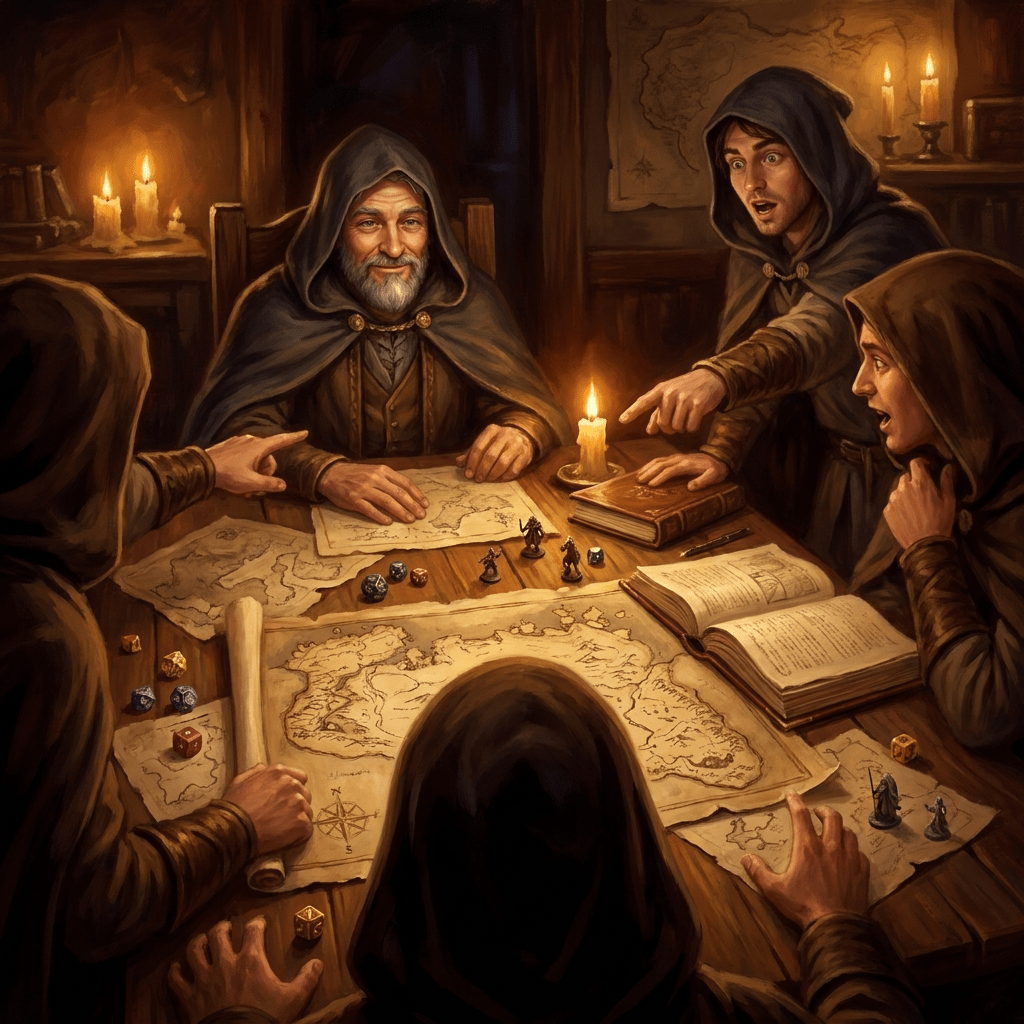
As a Game Master, you can spend hours crafting a perfect dungeon crawl, a tense political intrigue, or a dramatic confrontation with your campaign's villain. Then your players take one look at your careful preparation, turn left instead of right, and march confidently into territory you never planned for. If this sounds familiar, you are in good company. Every GM faces this moment, and how you handle it is what separates a good session from a legendary one.
Why Improvisation Is the Core GM Skill
Tabletop RPGs are collaborative stories, and collaboration means surprises. Players will pursue leads you planted as flavor text, befriend an NPC you sketched in two seconds, or skip the dungeon entirely to investigate the merchant who seemed slightly nervous. This is not a failure of your prep. It is the game working exactly as intended.
The good news: confident improvisation is a learnable skill. With a few reliable techniques in your toolkit, you can navigate any unexpected detour without your players ever suspecting you were caught off guard.
Four Pillars of Confident On-the-Fly GMing
When your players go somewhere unexpected, these four principles will keep your session running smoothly:
- Say "Yes, and" whenever possible: Accepting player choices and building on them keeps energy high and makes players feel their decisions matter. If they want to sneak into the castle instead of fighting through the front gate, say yes and invent what they find inside. You can always adjust your notes later.
- Steal from your prep: You prepared a bandit camp encounter that players skipped? Rename the bandit captain, move the location to the next town, and you have an NPC ready to go. Nothing you write is wasted. It just waits for the right moment.
- Use the rule of two: When you need to invent a location, person, or plot detail on the fly, give yourself two real options and pick the more interesting one. Need a shop owner? Imagine a bored halfling or a nervous half-elf. The nervous half-elf is almost always more interesting.
- Ask the players: Players love contributing to the world. Asking "What do you know about the Thornwood Thieves Guild?" puts the invention on them and keeps you in control. Use their answers as canon immediately.
Building an Improv Safety Net Before You Sit Down
The best improvisation happens when you have a few flexible building blocks ready, even when you are not sure where the session will go.
Prepare a Name List
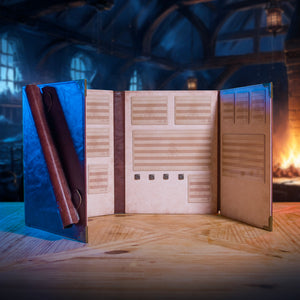
One of the most common improvisation freezes happens when a player asks, "What is this guard's name?" Keep a short list of ten to fifteen names somewhere on your GM notes or screen. Crossing them off as you use them means you never repeat yourself and never stumble.
Keep a Handful of Generic Locations
A dirty tavern with a broken sign, a crumbling stone bridge over a river, a dusty warehouse in a port district. These neutral backdrops can host almost any encounter. Pre-sketch two or three in broad strokes so you can drop them into any city or wilderness without hesitation.
Have Three NPC Motivations Ready
Most NPCs players encounter unexpectedly can be explained by three simple motivations: they want something, they are afraid of something, or they are hiding something. Assign one quickly, and your improv NPC will feel three-dimensional from the first line of dialogue.
Improv in Action: A Worked Example
Your players are supposed to escort a merchant caravan through the Ashwood Forest and deliver a letter to the mayor of Riverside. Instead, they spot an abandoned watchtower off the road and immediately investigate.
You have nothing prepared for the tower. Here is how you handle it in real time:
You pull from your safety net. The tower is three stories, crumbling, and dark inside (a generic location you already had sketched). As the players explore, you decide it is inhabited by a scout for the bandit gang you planned for the caravan encounter. You rename the bandit captain you had prepped "Mara Dusk" and place her in the tower instead of the road. Now the scene has tension, a face, and a connection back to your existing plot.
The players find Mara's journal. You know she wants money and is afraid of her employer. Suddenly they have a clue that the mysterious employer may be the mayor they were supposed to meet. Your detour just made the main plot richer.
You never faked it. You just recombined what you already had.
Keep Calm and Keep Rolling
Improvisation gets easier every session. The more you practice these techniques, the faster they become instincts. Take notes on the details you invent so you can make them consistent later, and do not be afraid to call a brief pause to think. Saying "Give me a moment to check my notes" buys you thirty seconds and looks perfectly natural.
Having the right tools at the table helps too. A sturdy, well-organized GM screen keeps your reference material, name lists, and location sketches right in front of you without revealing anything to players. The Ultimate Game Master Screen is designed exactly for this kind of fast, confident GMing: everything you need, hidden from exactly the people who should not see it.
Your players went off the map. That is a sign they are engaged, invested, and having a great time. Match that energy, trust your instincts, and remember: the best sessions are the ones no one fully planned for. Now get out there and make something unexpected happen.