As a Game Master, you spend hours crafting the perfect world, only to watch your players remember the funny innkeeper far more vividly than the ancient dragon you prepared for three sessions. NPCs are the heartbeat of your story, and the difference between a forgettable questgiver and a character your players talk about for years often comes down to one thing: a distinct, consistent voice. The good news is that you do not need to be a professional voice actor to pull this off.
Why NPCs Make or Break Your Campaign
Players connect to worlds through people, not just places and plot hooks. A well-voiced NPC gives your players someone to root for, someone to distrust, and someone to quote long after the session ends. When every tavern keeper sounds the same and every city guard uses the same phrasing, the world starts to feel flat. Give each recurring character a distinct way of speaking, and your players will start seeking those characters out instead of treating them as information dispensers.
Build a Voice Toolkit for Each Major NPC
Think of each NPC as having three core traits that shape how they communicate. You do not need all three for every background character. Save the full treatment for the five to eight recurring figures who drive your story.
- Speech pace: Does this character speak slowly and choose words carefully, or do they rattle off sentences at a breathless clip? A paranoid informant might start fast and then stop mid-sentence to listen for footsteps.
- Vocabulary level: A street urchin uses clipped slang. A wizard uses precise, technical language. A battle-hardened soldier speaks in short, blunt statements with no patience for pleasantries.
- Signature phrase or habit: A merchant who ends every sentence with "and that is a fair deal" or a nervous cleric who clears her throat before delivering bad news. These small tics make characters instantly recognizable across sessions.
Give Every Major NPC a Defining Want
Voice is about more than how a character sounds. It is about what they want and how that want colors every sentence they speak. A city guard captain who desperately wants to retire will talk about danger differently than one who is hungry for glory. Before your session, write one sentence finishing this prompt: "[NPC name] wants [goal] and fears [obstacle]." That single sentence will do more for your portrayal than any accent.
- The ambitious noble: Every offer sounds generous on the surface, but there is always a hidden favor buried inside. They never ask directly. They always imply.
- The grieving parent: Deflects questions about the missing child, changes the subject, then circles back compulsively. Their want drives the conversation even when they are trying to suppress it.
- The reformed bandit: Uses past tense to talk about violence, as if putting distance between themselves and old habits. "I used to handle problems differently" tells the players everything without a monologue.
Practical Tips for In-the-Moment Portrayal
Shift Your Posture, Not Just Your Voice
Leaning forward, crossing your arms, or dropping your chin slightly signals a character change even before you speak. Physical cues help players track who is talking without you having to announce it every time. Over a few sessions, players start reading your body language as fluently as your words.
Write One or Two Lines in Advance
For key NPCs in your upcoming session, jot down how they would answer the two or three most likely player questions. You do not need a full script. Two prepared lines anchor your improvisation so you are never starting from zero when the players do something unexpected.
Let NPCs Disagree With Each Other
Nothing kills the illusion faster than every NPC giving players the same information in the same tone. Build in contradictions. The blacksmith thinks the mayor is corrupt; the mayor thinks the blacksmith is a dangerous gossip. When players triangulate between conflicting perspectives, the world starts to feel genuinely alive and inhabited.
Example: The Same Scene, Two Different NPCs
Your players ask for information about a missing merchant. Here are two responses that establish completely different personalities while delivering the same facts.
Marta, the anxious innkeeper: She wipes the bar twice before answering, lowers her voice, and says, "He came through, yes. Paid in advance, which I always appreciate. Did not eat much. Left before dawn. I try not to ask questions." Her eyes keep drifting to the door.
Aldric, the retired soldier turned stablehand: He does not stop brushing the horse. "Merchant? Fancy coat, nervous hands. Left his horse saddled all night, which tells you everything you need to know. Either he was planning to run, or he was scared of something." He finally looks up. "You looking for him or avoiding him?"
Same information. Two completely different people. Your players will remember both.
A Few Tricks That Cost Nothing
- Name NPCs before the players ask: Introduce the name in their first line of dialogue. "I am Serafina, and I do not run a charity" is far more memorable than "the shopkeeper says she does not run a charity."
- Give minor NPCs one strong opinion: Even a random dockworker can have a firm view about the harbor master. Opinions create texture and give players something to react to.
- Repeat small details across sessions: If Serafina always wipes her hands on her apron before a hard conversation, do it every time. Players notice, and it deepens the sense that she is a real person with consistent habits.
Bring Your World to Life, One Character at a Time
Great NPC work is cumulative. Each session you invest in a handful of memorable voices, your world grows richer and your players grow more attached. You do not need a perfect performance. You need consistency and intent. Keep a short note for each recurring NPC with their voice traits, want, and fear, and you will always know who you are playing the moment they walk into the scene.
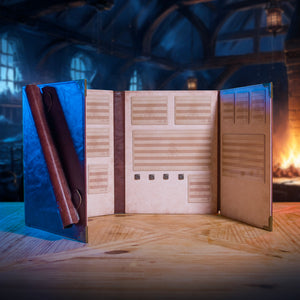
When you are managing NPC notes, encounter stats, and world details all at once, having everything organized and within reach makes a real difference. The Ultimate Game Master Screen keeps your key references right in front of you so you can stay in the moment and in character. Now get out there, give your NPCs a voice, and watch your players fall in love with the world you have built.