
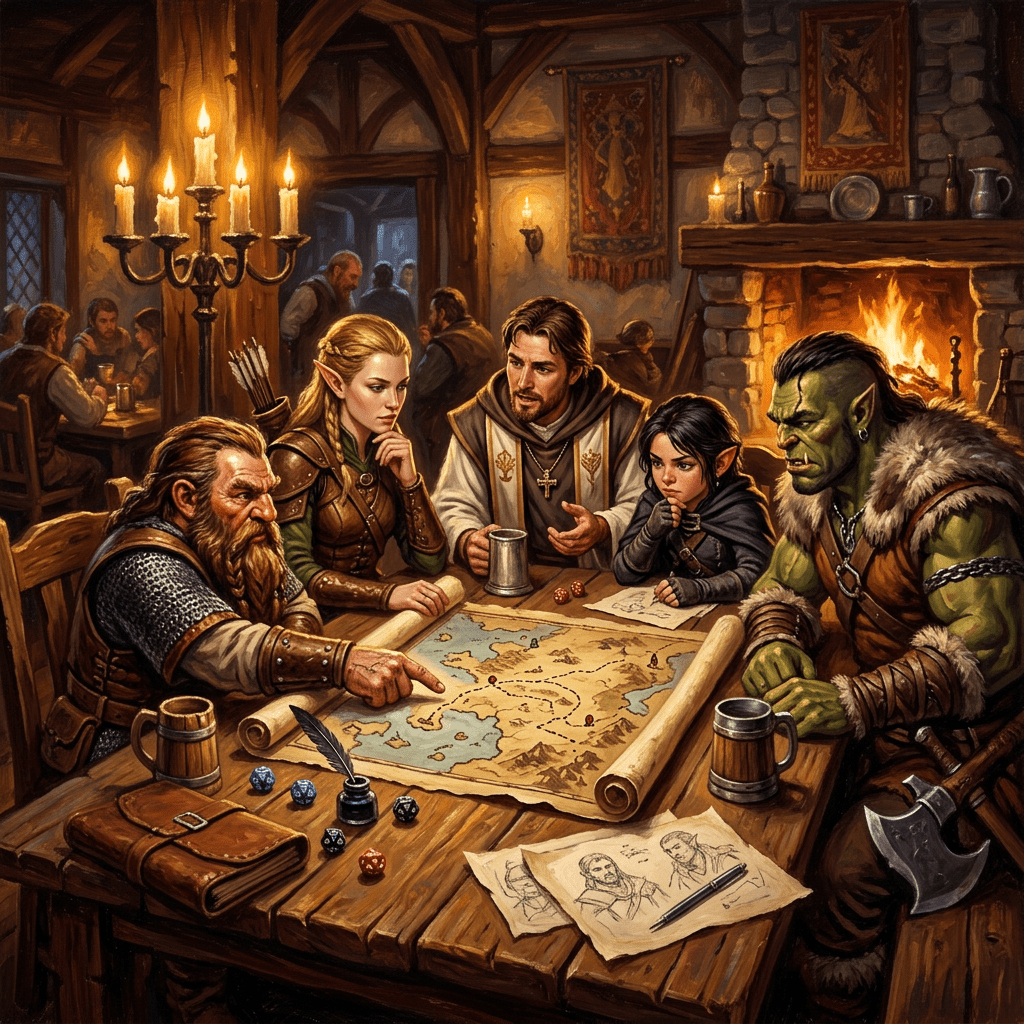
As a Game Master, you have probably lived through that sinking moment three sessions into a fresh campaign when you realize the party has no reason to travel together, one player showed up for gritty survival horror while another wanted a heist comedy, and nobody ever agreed on how often you would meet. That is not a player problem. It is a setup problem, and one focused Session Zero solves almost all of it before a single die hits the table.
Why Session Zero Is the Best Hour You Will Ever Spend
Most campaigns that collapse in month two actually failed in the first ten minutes of session one, when everyone quietly assumed they were playing a slightly different game. A Session Zero surfaces those assumptions while they are still cheap to fix. You get alignment on tone, buy-in on the premise, and a party with a reason to trust each other. You also get a pile of player-generated hooks you can steal for months of prep.
Treat it as a real session. Full attendance, ninety minutes to two hours. Do not bolt it onto the front of session one as a rushed preamble, because the conversation that matters will get steamrolled by everyone's eagerness to roll initiative.
The Four Conversations Every Session Zero Needs
Run it loosely, but make sure all four get covered. Each prevents a specific kind of campaign failure.
- Tone and Genre: Name the flavor out loud. Is this heroic high fantasy where the party are legends in the making, or a grim borderlands campaign where a bad night's rest can kill you? Give two or three concrete comparisons (a film, a book, a video game) so everyone pictures the same thing.
- Safety and Comfort: Ask what themes people want kept off the table, and give them a way to flag discomfort without making a speech. Lines and veils work well: lines are hard nos, veils are topics that exist in the world but happen off screen. An X card, an index card any player can tap to pause and skip a moment, costs nothing and protects the table.
- Table Logistics: Settle the boring stuff now. How often do you play, for how long, and what happens when someone cannot make it? Decide in advance whether an absent player's character fades into the background or gets run by a friend. Agreeing on this while nobody is annoyed beats deciding it at 8pm on game night.
- Party Bonds and Hooks: Nobody leaves without at least one connection to another character and one thread you can pull on. This single step does more for group cohesion than any amount of clever plotting on your end.
The Two Question Bond Exercise
If character connections feel awkward to force, use this quick round robin. Ask each player two questions about the player to their left: "How do you know them?" and "What do you owe them, or what do they owe you?" Answers can be small. A shared cellmate, an unpaid bar tab, a life saved during a flood. In ten minutes you will have a web of relationships that keeps the party together when the plot gets hard.
Keeping the Energy Up
The biggest risk of a Session Zero is that it feels like a meeting. Fight that. Sketch the map together while you talk. Let players name a town, a festival, a rival mercenary company. Write down whatever they invent and promise it will show up later. Nothing builds investment faster than watching your throwaway idea become a plot point.
Close with a short scene. Ten minutes of play, no combat, just the party in a room making a small choice together. It gives everyone a taste of your GM voice and sends them home hungry for session one.
Session Zero Example: The Ashfall Compact
Suppose your pitch is a campaign set in a valley slowly being poisoned by ash from a waking volcano. You name the tone up front: desperate, community focused, low magic, closer to a survival story than a dungeon crawl. One player asks whether their character can lose people they love. You mark that as a veil, so loss happens off screen. Another wants no body horror at all, so that becomes a line.
Then you ask why they are still in the valley when everyone sensible has fled. The answers write your campaign for you: a cleric bound by an oath to a shrine that cannot be moved, a smuggler with debts that follow them, a farmer who refuses to abandon the family orchard. That is three arcs, a reason the party sticks together, and a villain who only needs to threaten what they just told you they care about.
Turn Your Notes Into Session One
Before you close your notebook, copy every name, debt, oath and rivalry the players invented onto one page. That page is your prep list. Session one should touch at least two items on it, so players see immediately that what they said mattered.
Set the Table, Then Play
A great Session Zero is not bureaucracy. It is the moment your campaign stops being your idea and starts being everyone's story. Spend the hour, ask the honest questions, and you will spend the next year running a game the whole table is excited to show up for. Keeping all those names, oaths and safety notes at your fingertips is far easier with a dedicated spot for them, which is exactly why a well built Ultimate Game Master Screen earns its place at your table. Now go gather your players, ask them what they want, and build something none of you could have imagined alone. Roll well and have fun out there.