As a Game Master, you have felt the exact moment when a big fight stops being exciting and starts being paperwork. Twelve creatures are in the initiative order, three of them are poisoned, one player is concentrating on a spell nobody can quite name, and you have just realized you skipped a turn two rounds ago. Large combats should be the highlight of a session, not a spreadsheet you are running from memory. The good news is that chaos in a big fight is almost always a tracking problem, and tracking problems have practical solutions.
Why Big Fights Fall Apart
A combat with four players and two monsters basically runs itself. A combat with six players, eight goblins, a hobgoblin captain, and a lair action on initiative count 20 is a different animal. Every extra participant multiplies what you are holding in your head: turn order, hit points, conditions, durations, concentration checks, and who is standing where. Once you exceed what you can comfortably remember, small errors creep in. Small errors slow the table down, and a slow table loses tension fast.
The fix is not to run smaller fights. The fix is to move information out of your head and onto something you can see at a glance.
Build an Initiative System You Can Trust
Whatever system you choose, it needs three qualities: it should be fast to set up, easy to change mid fight, and readable without shuffling papers. Two approaches hold up especially well under pressure.
The Index Card Ladder
Write each combatant on a small card or sticky note and hang them in order along the top edge of your screen. Players see exactly when their turn is coming, so they plan ahead instead of starting to think when you call their name. Adding reinforcements mid fight is as simple as sliding a new card into place.
The Single Column Method
If you prefer to keep the monster order hidden, write the full order in one vertical column with generous spacing between names. The space to the right of each name becomes that creature's living record: current hit points, active conditions, and the round each condition ends. One glance down the column tells you the entire state of the battlefield.
Track Conditions Where Everyone Can See Them
Conditions are where most tables lose the thread, because a condition belongs to a creature but gets remembered by a person. Push that memory outward, onto the table, where it cannot quietly disappear.
- Give every condition a physical marker: A colored ring, a bead, or a token on the miniature turns an invisible rule into a visible fact nobody has to recall.
- Make players own their own effects: Anyone casting a spell with a duration tracks the round it ends and announces it. You should not be the timekeeper for someone else's hex.
- Write the end, not the start: Instead of "poisoned, one minute," note "poisoned until round 12." Reading a number beats subtracting one.
- Say the effect, not the label: Telling a player "you have disadvantage on attacks and ability checks" rather than "you are poisoned" means nobody stops to look anything up.
- Check concentration immediately: The instant a concentrating creature takes damage, call the save before you move on. Delayed checks become forgotten checks.
Speed Up the Turns Themselves
Tracking is only half the battle. The other half is keeping each turn short. Roll attacks for identical monsters together, using one handful of dice and reading the results in order. Set a gentle expectation that players decide their action while the previous person is acting. When a player freezes, offer to come back to them at the end of the round.
Group your minions as well. Eight goblins do not need eight initiative slots. Roll once for the whole squad and move them as a unit, tracking a tally of how many remain. You lose almost nothing in tactical texture and you cut round length dramatically.
Encounter Example: The Ambush at Reedfall Bridge
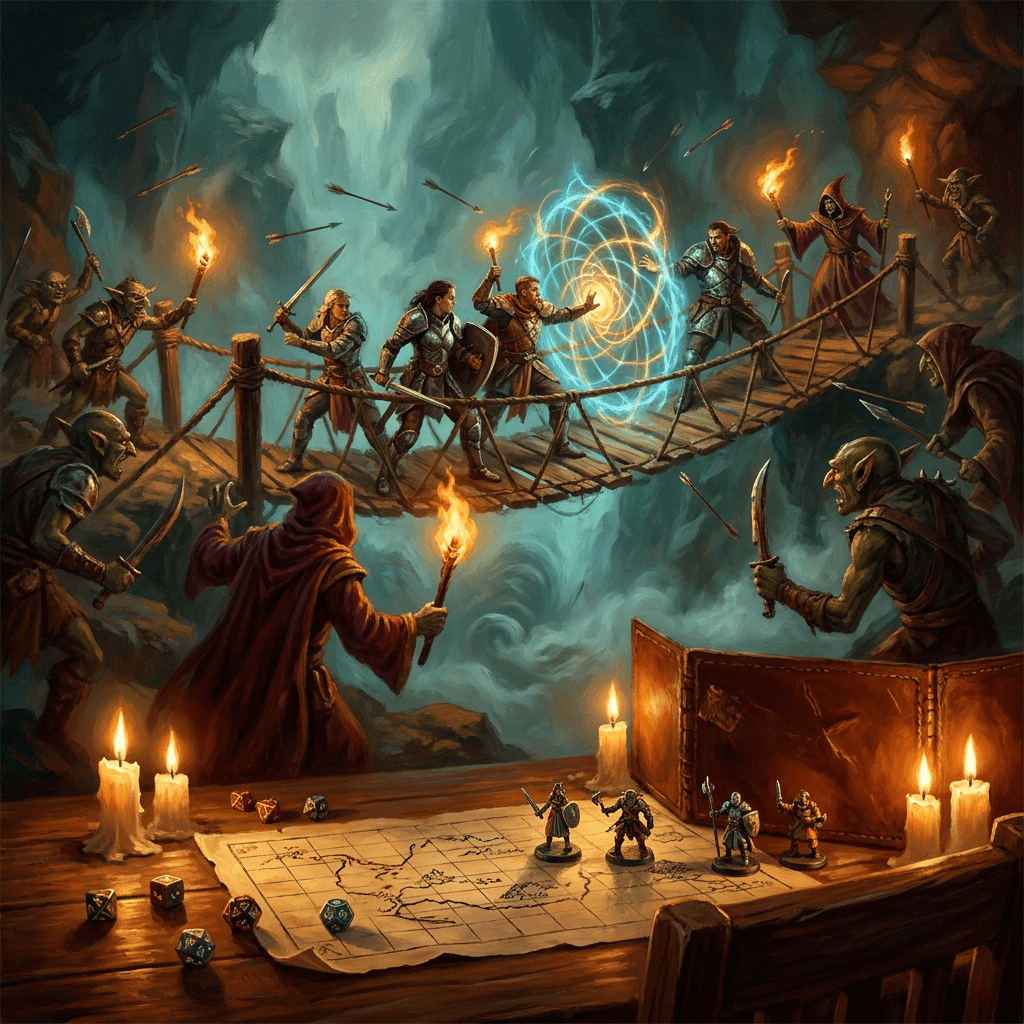
Your party of five is halfway across a rope bridge when nine bandits and their captain spring the trap. Instead of ten initiative entries, you roll three: one for the six crossbow bandits on the ridge, one for the three brawlers blocking the far side, and one for the captain. Three enemy slots plus five players gives you a manageable eight.
On your card ladder, each squad gets one card with a tally of survivors. When the wizard drops a web spell across the ridge, set a paper strip on the map and write "web, ends round 7" directly on it, so the duration lives on the battlefield instead of in your notes. When the captain takes an arrow while concentrating, call the save on the spot. The fight still feels enormous and dangerous, but you are only tracking eight turns and three visible effects.
Run the Chaos Instead of Surviving It
Large battles earn their place because they feel overwhelming to the characters. They should never feel overwhelming to you. Externalize the information, group what can be grouped, and let your players carry their own durations. Do that consistently and you will find you have room left over to describe the creaking ropes, the arrows in the river mist, and the captain's snarl, which is the part everyone actually remembers.
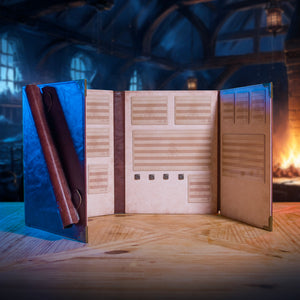
A tidy command center makes all of this easier. A good screen gives you a place to hang initiative cards, park your notes, and keep your rolls hidden, all at once. If you want that setup ready to go, the Ultimate Game Master Screen was built for exactly this kind of table.
Now go run the biggest fight your party has ever seen. Keep experimenting, keep it moving, and have fun with the mayhem.