As a Game Master, few things sting quite like watching a mystery you spent hours crafting collapse in the first ten minutes, or worse, grind to a halt because nobody can figure out what to do next. You want that satisfying middle ground: a case that resists easy answers but never leaves your players stranded. The good news is that running a great mystery has very little to do with being clever and almost everything to do with how you structure and reveal information. Let us walk through how to build investigations that keep your table leaning forward.
Why Mysteries Stall (and Why They Fizzle)
Most mystery problems come from one of two failures. The first is the dead end: players hit a wall because the single clue they needed was hidden behind a roll they failed or a question they never thought to ask. The second is the instant solve: a sharp player connects the dots before the table has had any fun, and suddenly the big reveal lands with a shrug. Both problems share a root cause, which is that the Game Master tied the pacing of the story to the players guessing correctly rather than to the players doing interesting things.
Once you stop hiding the solution and start managing the flow of revelation, mysteries become far easier to run. Your job is not to outsmart the table. Your job is to give them a rewarding trail to follow.
The Three-Clue Rule
The single most useful tool in your kit is the Three-Clue Rule: for any conclusion you need the players to reach, plant at least three separate clues that point toward it. If they miss one, they find another. If they misread a second, the third sets them straight. Redundancy is not lazy design, it is insurance against the unpredictable ways real people think.
When you map your mystery, list each key fact the players must learn, then brainstorm multiple routes to each one:
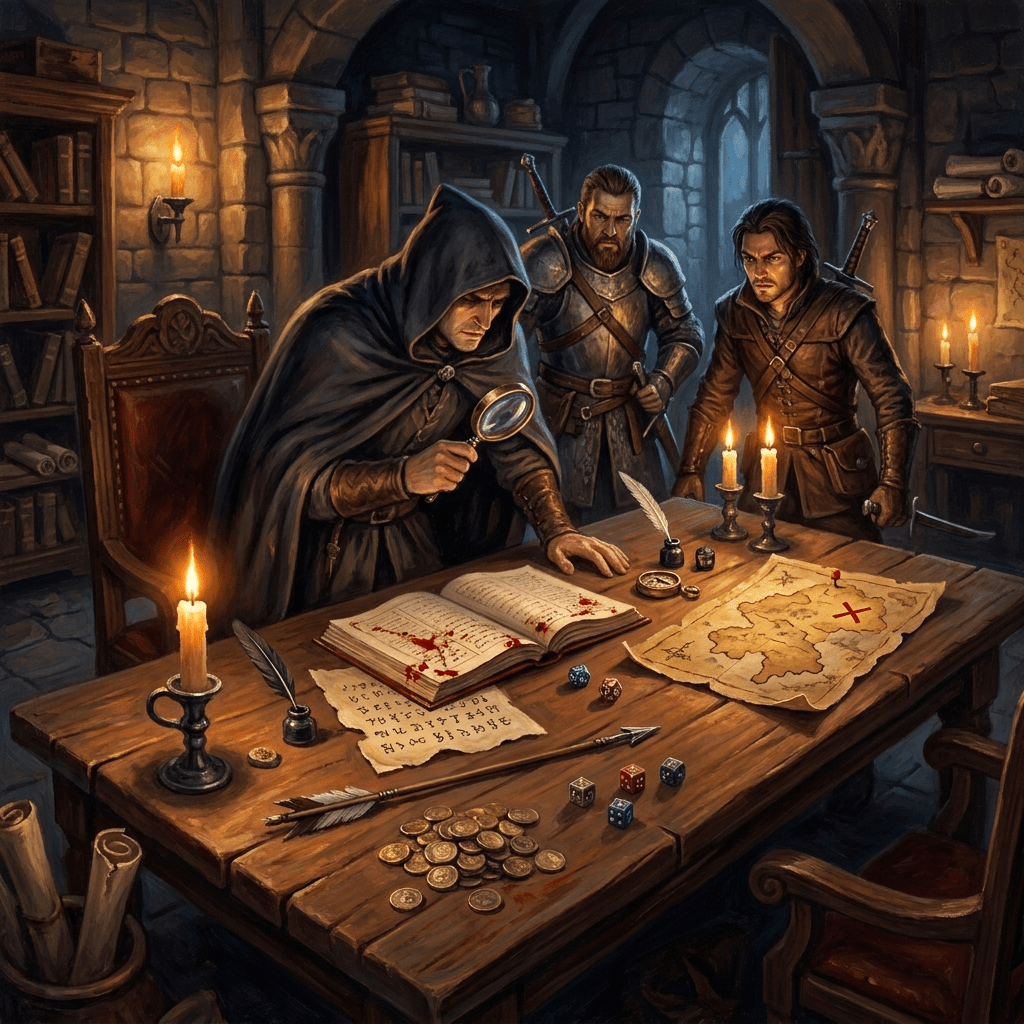
- Physical Evidence: A bloodstained ledger, a snapped arrow, or muddy boot prints that only match one suspect.
- Testimony: A nervous witness, a bragging tavern drunk, or a servant who saw more than they should have.
- Deduction: A conclusion the party can reach by combining two earlier facts, rewarding the players who take notes.
- Environmental Detail: A locked door, a missing painting, or a clock stopped at a telling hour.
With three or more paths to every beat, you can stop fearing failed rolls. A blown Investigation check just means the party finds the truth through a conversation instead.
Control the Pace, Not the Answer
To slow down a table that solves things too quickly, do not hide more information. Instead, add complications between the clue and the conclusion. Introduce a red herring that is genuinely suspicious, a suspect with a believable alibi, or a second crime that muddies the timeline. The players still gather clues at a steady rate, but each new fact reshapes the picture rather than completing it.
To speed up a table that is stuck, lean on what I call the active clue. Have the world come to them: a hired thug attacks, a witness turns up dead, or a contact sends an urgent message. Movement creates momentum, and a stalled investigation almost always recovers the moment something happens to the players instead of around them.
A Worked Example: The Merchant's Missing Daughter
Say the party is hired to find a merchant's missing daughter, who actually faked her own kidnapping to escape an arranged marriage. The conclusion you want is "she left willingly." Plant three clues: her room shows no signs of a struggle and her travel cloak is gone (physical), a stablehand mentions she asked about the southern road last week (testimony), and the ransom note uses a family nickname only she would know (deduction).
If the players race ahead and guess too soon, slow them with a complication: a rival merchant really does want her gone, so his thugs are also hunting her, which makes the trail look like a genuine abduction. If the players stall, fire an active clue: one of those thugs corners the party, revealing that someone else is searching too and raising the stakes. Either way, the players keep moving and the story keeps breathing.
Reward Curiosity Over Correctness
Finally, remember that the joy of a mystery is the chase, not the verdict. Praise creative theories even when they are wrong, let players feel smart for spotting connections, and never punish a table for approaching a problem sideways. When your players sense that exploration is rewarded, they engage more deeply, and a deeply engaged table is the one that remembers your game for years.
Keep Them Guessing
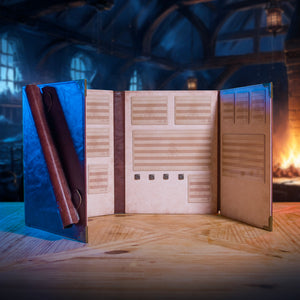
Running a memorable mystery is a skill you build one session at a time, and every table will teach you something new about how players think. Layer your clues, manage your pacing, and keep a few complications in your back pocket, and you will deliver investigations that feel clever without ever feeling unfair. Keeping all those threads, suspects, and secret notes organized at the table is half the battle, which is exactly why a sturdy, well-stocked screen like the Ultimate Game Master Screen earns its place in front of you. Now go plant those clues, trust your players to find them, and have a blast watching the case unfold.