
As a Game Master, you know the feeling: your session starts in three days, and you are forty pages deep into the economic history of a kingdom your players may never visit. Worldbuilding is one of the great joys of running tabletop RPGs, but it can quietly become a trap. Hours of prep vanish into binders while the material your players actually touch stays thin. The good news is that you can run a world that feels deep and alive while prepping a fraction of what you do now.
Why Over-Prepping Backfires
Over-prepping does not just cost you time. It changes how you run the game. Once you have invested six hours in a city's noble houses, you start steering players toward that content whether or not they care about it. Players can feel that pull, and it drains their sense of agency. Heavy prep also makes you brittle: the more detailed your plan, the more it stings when the party ignores it, and the more tempted you are to force it back on stage. Lean prep keeps you flexible, and flexibility is what makes sessions feel alive.
Render Detail Where the Party Is Standing
Think of your world like a video game engine that only renders what the camera can see. You need real detail within one session's travel of the party: the town they are in, the NPCs they will meet, the dungeon on their map. One region out, you need rough shapes: a name, a reputation, one conflict. Beyond that, you need nothing but evocative labels on a map. "The Ashen Reach" costs you five seconds to write and does more work in your players' imaginations than three pages of history they will never read.
This approach means you never build speculatively. You build reactively, one step ahead of your players, guided by what they actually chose to pursue. Nothing you make gets wasted because everything you make is about to be used.
The Lean Worldbuilder's Toolkit
A few reusable techniques will cover most of what a session demands:
- Three-Detail Locations: Define any new place with exactly three things: a sensory hook (the smell of tar and fish), a person worth talking to, and a tension simmering under the surface. Players will assume everything else exists.
- Name Banks: Keep a list of twenty unused names for people, taverns, and villages behind your screen. Improvised NPCs feel planned when they have a ready name instead of a stammer.
- Fronts, Not Plots: Instead of scripting story beats, write down what each villain or faction will do if no one stops them. When players wander, advance the fronts. The world moves without you plotting a single scene.
- Player-Sourced Lore: Ask questions like "Your character grew up near here. What do people whisper about the old tower?" Players build your world for you and become invested in the answer.
- The Blank Spot Rule: Deliberately leave regions undefined. Blank space is not laziness. It is room for the campaign to grow toward whatever your table finds interesting.
Worked Example: Grayharbor in Twenty Minutes
Suppose your party unexpectedly sails for a port town you have never detailed. Here is a full prep session, timed. Minutes one to five: three details. Grayharbor smells of brine and burnt whale oil, the harbormaster Edda Volk knows every ship and every secret, and the fishing guild is quietly buying up debts around town. Minutes six to ten: pull five names from your name bank and jot one line for each (a smuggler, a priest, a rival captain). Minutes eleven to fifteen: write one front. The fishing guild intends to seize the docks within a month, and this week they are intimidating a shopkeeper the party will likely meet. Minutes sixteen to twenty: sketch a five-location map: docks, market, temple, guildhall, and one mysterious shuttered warehouse. That is it. You now have a town that can sustain two or three full sessions, and every piece of it points toward play.
Turn Improvisation Into Canon
Lean prep only works if you capture what you invent. Keep a running "world ledger": one page where you record every name, place, and fact you improvise during play. Five minutes after each session updating the ledger turns your off-the-cuff answers into consistent canon, and consistency is what makes players believe the world was planned all along. Next week, when someone asks about Edda Volk, she is exactly where you left her.
Conclusion: Build the World at the Table
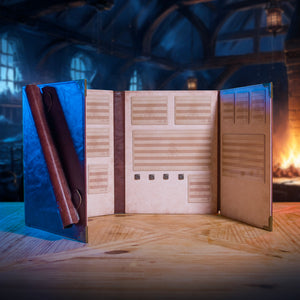
Your world does not need to be finished. It needs to be responsive. Prep the space your players occupy, sketch the horizon, and let the rest emerge from actual play, where it will always fit better than anything designed in isolation. Keeping your name banks, fronts, and world ledger organized behind an Ultimate Game Master Screen means every improvised detail is one glance away when you need it. So close the forty-page binder, open a single fresh page, and trust yourself. Keep experimenting, keep it light, and have fun out there!